The Ro (Row) Heard Around the World
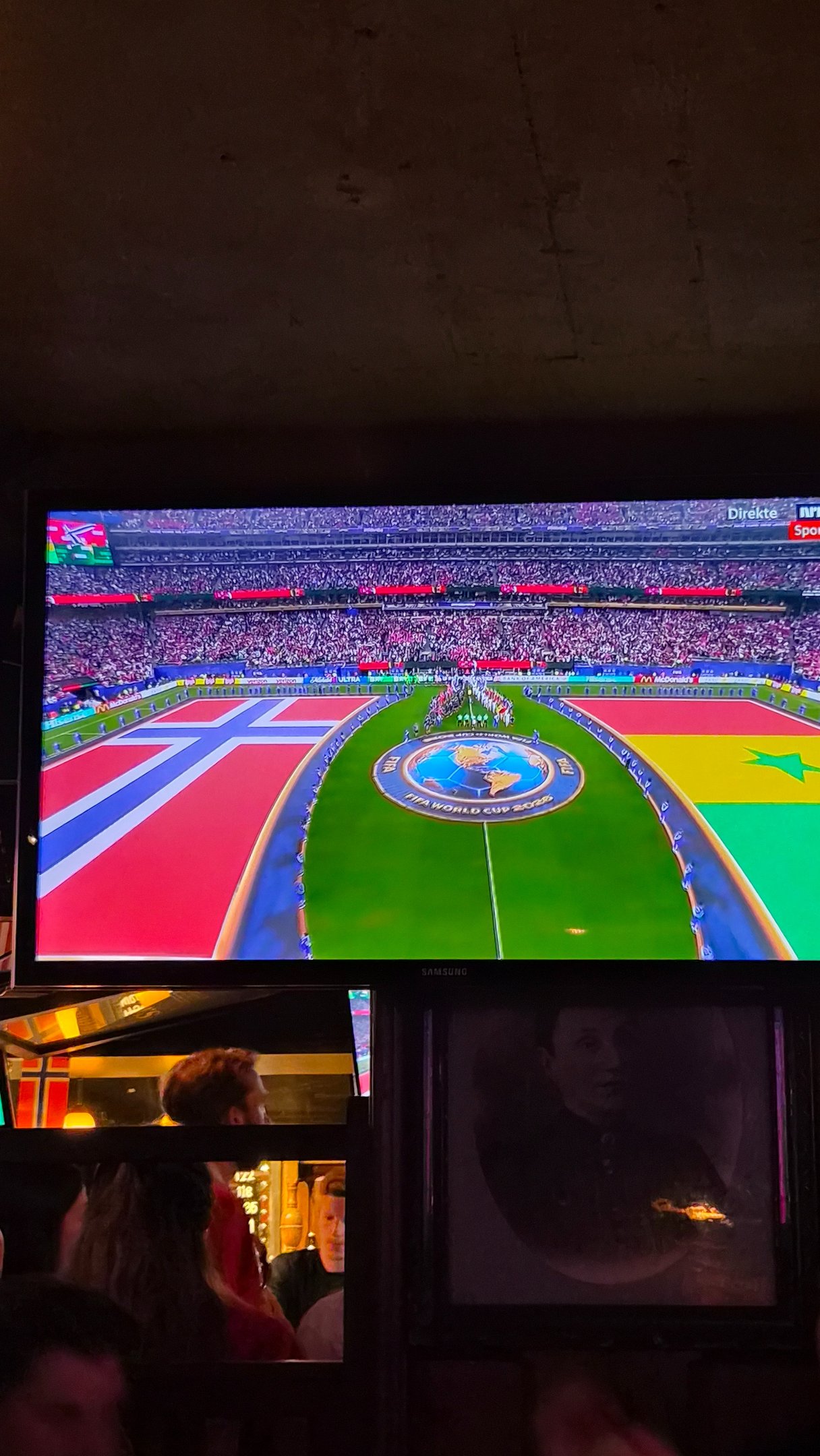
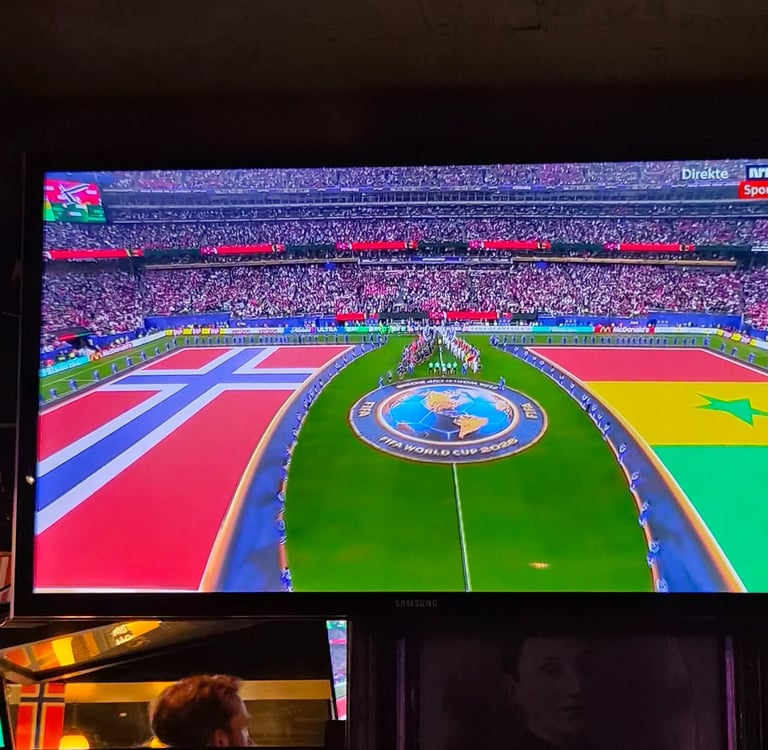
In the United States, Norwegians are becoming known for their rowing.
Not rowing in boats, exactly. Rowing in stadiums. On escalators. In city squares. In crowded bars. On the other side of the world from home.
I first saw it while walking around Boston prior to Norway’s first game in the 2026 World Cup, when the Norwegians arrived in red, white, and blue, sat down together, and began to move as one. Back and forth. Back and forth. A drumbeat. A chant. Ro. Row. Ro. Row.
At first, it was here and there in Boston. On the streets, in the pubs, on the escalator coming out from the T.
But then it kept happening.
People started noticing. Not just Norwegians. Not just Bostonians. Not just those who followed the team closely. People across the United States, and then across the world, began to recognize Norway not only for Haaland, not only for Ødegaard, not only for the fact that they had returned to the World Cup after so many years, but for this collective rowing motion that seemed to pull people in.
Then Norway did the unthinkable.
I was in the basement of a packed pub in Oslo when it happened. It was late, or early, depending on how you measure time on nights like that. The room was warm, crowded, and electric. People were pressed shoulder to shoulder, eyes fixed on the screens, voices rising and falling with every pass, every touch, every near miss. When the final whistle blew, the room erupted.
Norway had done it. They had beaten Senegal 3 to 2. They had secured a place in the knockout stage.
And after the match, something beautiful happened.
The players sat down on the pitch.
Martin Ødegaard took the drum.
And together, the team and the supporters in the stadium began to move. Back and forth. Back and forth.
And we did too.
Ro.
Row.
Ro.
Row.
A team on the pitch.
Fans in the stands.
Friends and strangers in a pub.
A country awake in the middle of the night.
People across oceans joining in from wherever they were.
For a few seconds, geography collapsed.
The pitch, the stadium, the basement pub, the streets of Oslo, the Norwegian fans in the United States, everyone gathered in living rooms and bars and public squares, all of us seemed to become part of the same rhythm.
Ro.
Row.
Ro.
Row.
I was no longer just watching something happen. I was part of it. We were all part of it.
For one brief moment, we were connected by something so simple it almost felt ancient.
A drum.
A word.
A shared movement.
Bodies leaning back and forward together.
It was ridiculous and beautiful and deeply human.
I have never felt anything quite like it.
I am not usually someone who becomes emotional over sports. But that moment brought tears to my eyes. Not only then. In the days after, too. Not only the win, although the win mattered. Not only the history of the moment, although that mattered too. It was the feeling of thousands, perhaps millions, of people, scattered across the world, moving together.
I kept thinking about it. The sound. The rhythm. The sight of a team sitting on the ground after one of the biggest wins in recent Norwegian football history, choosing not to stand apart from the fans, not to perform above them, but to sit with them. To move with them. To celebrate through connection rather than spectacle. There was something almost sacred in how simple it was.
No speech. No explanation. No complicated choreography.
Just bodies moving in rhythm.
A drum.
A word.
Ro.
Maybe that is why it stayed with me. Because we are living in a time where connection often feels harder than it should.
The world feels fragmented. War, displacement, political violence, loneliness, distrust, polarization, and grief sit beneath so much of daily life. We scroll past suffering so often that sometimes it feels impossible to know how to remain human in the face of it all.
Conflict continues to tear families and communities apart in Gaza, Sudan, Ukraine, Congo, and so many other places. Millions of people have been forced from their homes. In the United States, public life often feels defined by suspicion, anger, and distance. Across countries, people are increasingly lonely, increasingly isolated, and increasingly unsure where they belong.
And then, in the middle of all of that, a group of people sat down and rowed.
It did not fix anything. Of course, it did not.
A football chant cannot end a war. It cannot repair a broken political system. It cannot bring people home. It cannot erase loneliness or grief or fear.
But it can remind us of something we are in danger of forgetting.
That human beings are built for connection.
That our bodies respond to rhythm, voice, movement, and shared emotion.
That sometimes, for a brief moment, people who do not know one another can become part of something together.
That joy, too, can be collective.