Questions that come from communities, not about them
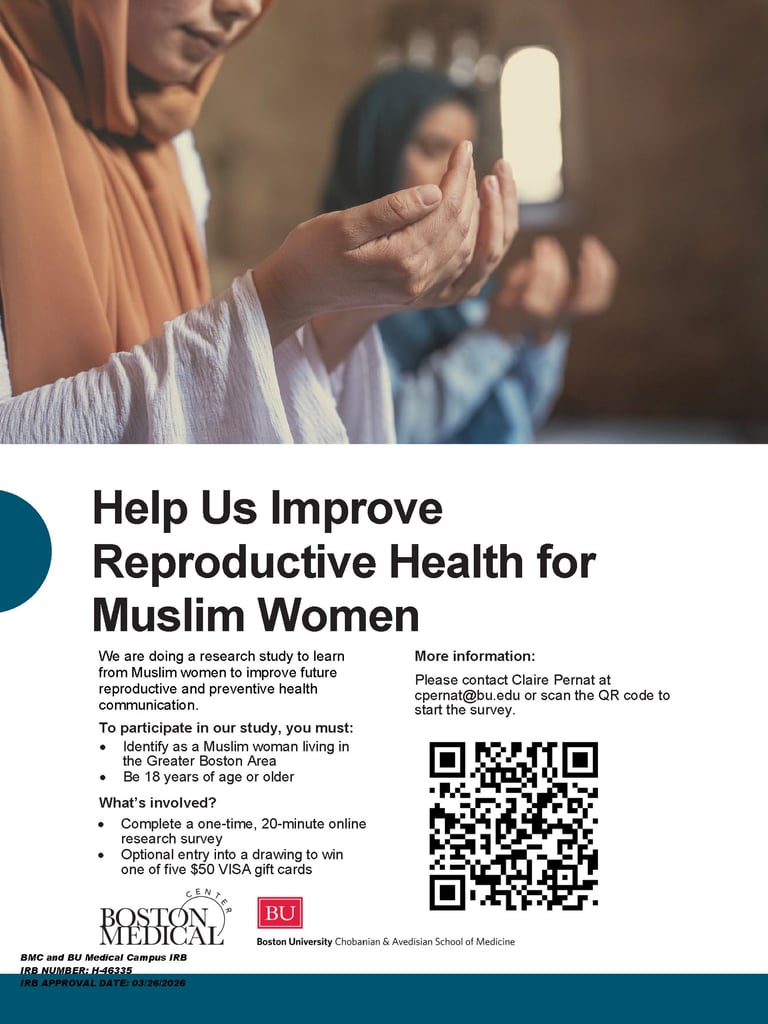
Improving HPV Vaccination and Cervical Cancer Screening in Muslim Women through Belief-Informed Health Communication
Cervical cancer kills around 4,000 women in the United States (US) each year,
despite being nearly 100% preventable. Human papillomavirus (HPV) causes
almost all cervical cancer cases. While HPV vaccination prevents up to 90% of
HPV-related cancers, regular cervical cancer screening is essential to cover those
who are unvaccinated. Routine cervical cancer screening is highly effective at
detecting precancerous lesions, and with early detection and treatment, the five-
year survival rate exceeds 90%. Yet Muslim women in the US have substantially
lower HPV vaccine uptake and are less likely to be up to date on cervical cancer screening than women in the general US population, and they are more than twice as likely to be diagnosed at an advanced cancer stage. These gaps reflect not only structural barriers, but also cultural and religious stigma, modesty and virginity norms, and mistrust of the health system.
This dissertation addresses the need for tailored communication strategies that improve HPV vaccination and cervical cancer screening uptake among Muslim women by identifying and addressing belief-based challenges through multi-method, community-engaged studies focused on Muslim women in Greater Boston. Guided by the Health Belief Model, Aim 1 will field a cross-sectional survey (n=500) to identify beliefs associated with HPV vaccination intentions for oneself and one’s child. Aim 2 will use the same survey to examine how belief patterns are associated with cervical cancer screening uptake. Across both aims, the Hornik and Woolf health communication approach will be used to prioritize beliefs that are both strongly associated with behavior and realistically modifiable through communication, with particular attention to age and marital status.
Aim 3 will conduct 6 focus groups with Muslim women to refine belief-informed messages for cervical cancer screening, with an emphasis on younger, unmarried women. In partnership with a Community Advisory Board, the study will co-develop faith-aligned communication strategies for dissemination in trusted community settings.
This dissertation will generate insights into how beliefs and health communication preferences influence HPV vaccination and cervical cancer screening behavior among adult Muslim women and will identify testable strategies that address modifiable beliefs that impact cervical cancer screening behaviors.